Practical
Bangkok Travel Guide
The practical layer under every Bangkok trip: how to arrive, how to move, how to pay and how not to get caught out. Entry rules link to official sources, because they change.
Updated
7 min read
How we research
In this guide ↓
This guide covers the practical side of a Bangkok trip: arriving, moving around, paying, staying connected and avoiding the common mistakes. For what to actually do, see things to do in Bangkok; for where to base yourself, read where to stay in Bangkok.
Before you go: entry requirements
We don't summarise visa rules beyond the basics, because they change and the consequences of being wrong are serious. Use official sources:
- Visas and exemptions: the Thai Ministry of Foreign Affairs' e-Visa portal and your nearest Thai embassy. Travelling on an Indian passport? See Thailand entry rules for Indian passport holders.
- Thailand Digital Arrival Card (TDAC): foreign visitors must complete the TDAC online before arrival. It replaced the old paper TM6 arrival card in May 2025. Use only the official site, tdac.immigration.go.th. It's free, and it can be submitted within the three days before you arrive.
- Passport validity: make sure your passport has plenty of validity left beyond your travel dates; airlines may refuse boarding otherwise.
When to visit Bangkok
Bangkok is hot all year. The difference between seasons is mostly about rain and humidity. See the best time to visit Bangkok for a month-by-month guide, and Bangkok in the rainy season if you're travelling between June and October.
| Period | What to expect | Worth knowing |
|---|---|---|
| November–February | The "cool" season: drier, less humid, still warm | Peak season — book hotels earlier |
| March–May | Hot season; April is usually the hottest month | Songkran (Thai New Year, 13–15 April) brings citywide water fights |
| June–October | Rainy season | Rain usually comes in heavy bursts, often in the afternoon or evening, rather than all day |
Getting from the airport to the city
The short version is below; our airport to the city guide covers every option in detail.
Bangkok has two airports. Check which one your flight uses: budget airlines often fly to Don Mueang.
From Suvarnabhumi (BKK)
- Airport Rail Link (ARL): the fastest option in traffic. It runs from the airport basement to Phaya Thai, where you can change to the BTS Skytrain, in about 26–30 minutes. The fare to the end of the line was 45 THB when we checked (October 2026). Trains run roughly from 5:30am to midnight. Best with light luggage.
- Metered taxi: use the official public taxi queue on the arrivals level. You pay the meter plus a fixed airport surcharge and any expressway tolls. Insist on the meter.
- Grab: book through the app; the pick-up point is signposted.
- Pre-booked transfer: worth it for late-night arrivals, families and anyone with lots of luggage.
From Don Mueang (DMK)
- SRT Red Line: a commuter rail line from Don Mueang station to Krung Thep Aphiwat Central Terminal, where you can change to the MRT Blue Line at Bang Sue.
- Airport buses run to BTS Mo Chit and other city points.
- Metered taxi or Grab, as at Suvarnabhumi.
Getting around Bangkok
The single best tip for Bangkok: stay near a BTS or MRT station and use rail wherever possible. See our BTS and MRT guide. Traffic on the roads can turn a 5-kilometre trip into an hour.
BTS Skytrain
Two elevated lines meet at Siam: the Sukhumvit Line (north to Mo Chit and Ari, east along Sukhumvit) and the Silom Line (through Silom to the river at Saphan Taksin). Fares depend on distance. Buy single-journey tickets at station machines, or a stored-value Rabbit card if you'll ride often.
MRT (metro)
The Blue Line is a loop that's especially useful for visitors: it reaches the Old Town (Sanam Chai, Sam Yot), Chinatown (Wat Mangkon, Hua Lamphong), Silom, Sukhumvit and Chatuchak. The MRT accepts contactless bank cards at the gates.
River boats
The Chao Phraya Express Boat links the riverside hotels (Sathorn pier, at BTS Saphan Taksin), Chinatown and the Old Town piers. It's cheap, scenic and immune to traffic. Our Chao Phraya River guide explains the coloured flags and the main piers.
Taxis, Grab and tuk-tuks
- Metered taxis are plentiful and inexpensive. If a driver refuses the meter, close the door and take the next one.
- Grab (and other ride-hailing apps) show the price upfront and avoid the meter conversation. Useful at night and from tourist areas, where some taxi drivers quote flat fares.
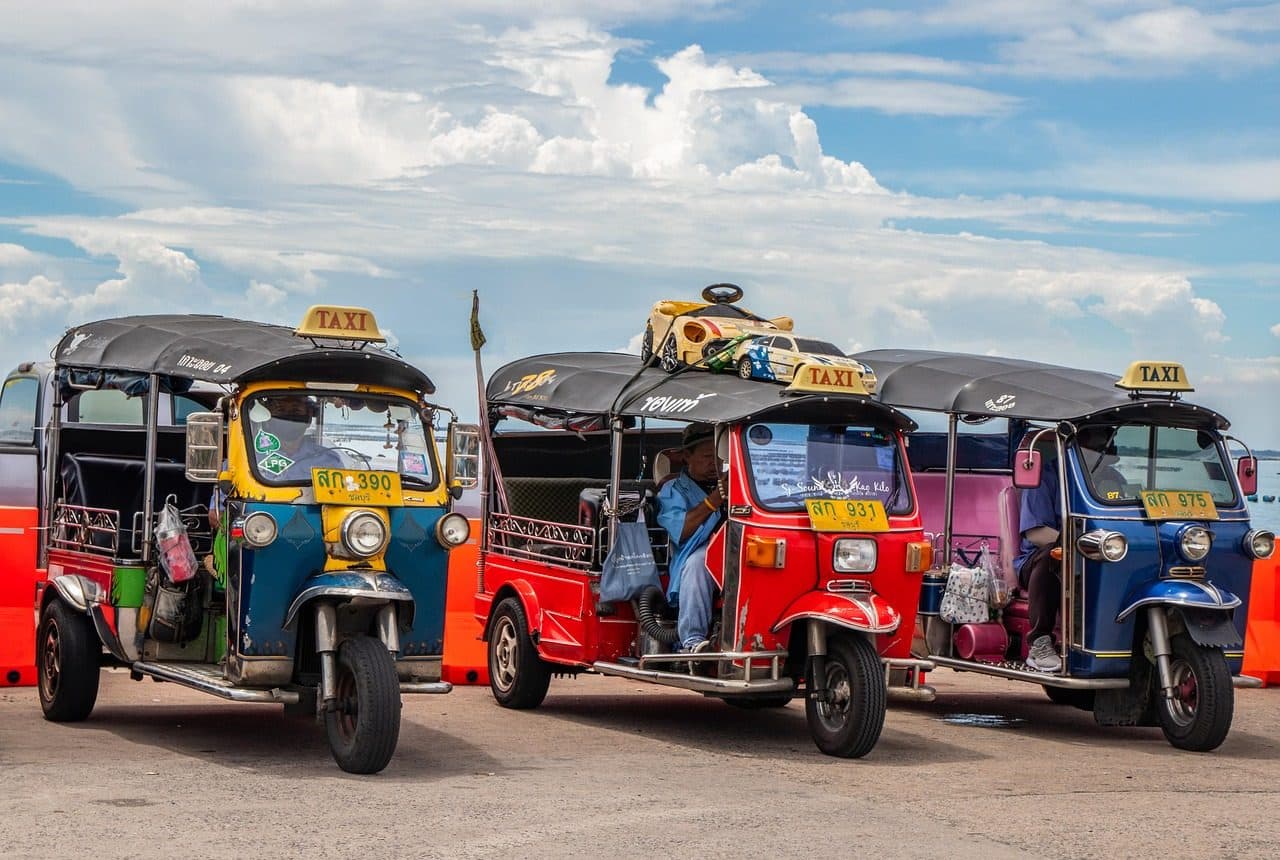
- Tuk-tuks are fun for a short hop, but there's no meter and fares are negotiated — often above taxi prices. Never accept a cheap "tour" from a tuk-tuk driver; it usually ends at a shop paying commission.
Money
- Currency: Thai baht (THB).
- Cash: still essential for street food, markets, small shops and taxis. Carry small notes.
- Cards: widely accepted at hotels, malls, larger restaurants and chains.
- ATMs: everywhere, but Thai banks charge a flat fee of a couple of hundred baht per withdrawal on foreign cards, on top of anything your own bank charges. Withdraw larger amounts less often. When an ATM or card terminal offers to charge you in your home currency, decline and pay in baht — the exchange rate is usually worse.
- Exchange: exchange booths in Bangkok often beat airport rates.
SIM cards, eSIMs and internet
Mobile data is fast and cheap. You can buy a tourist SIM from the main networks at the airport (bring your passport; SIMs must be registered), or set up an eSIM before you fly if your phone supports it. Free Wi-Fi is common in hotels, cafés and malls. See SIM cards and eSIMs for how to choose.
Safety and common scams
Bangkok is generally safe for visitors. Violent crime against tourists is rare; the more common problems are scams, traffic and the heat. Our guide to Bangkok scams explains each one and what to say.
- "It's closed today." A friendly stranger tells you the Grand Palace or a temple is closed and suggests a tuk-tuk tour instead. It isn't closed.
- Gem and tailor shops. Any "special government sale" on gems is a scam.
- Taxi flat fares near tourist sights and nightlife areas. Insist on the meter or use Grab.
- Roads. Traffic is the real hazard. Use pedestrian bridges, and look both ways even on one-way streets — motorbikes don't always follow the rules.
- Heat. Drink water constantly, wear sunscreen and plan indoor breaks in the afternoon.
Dress codes and etiquette
- Temples: shoulders and knees covered for everyone. Remove shoes before entering temple buildings. Don't point your feet at Buddha images or monks.
- The monarchy: the Thai royal family is deeply respected, and Thailand has strict laws protecting it. Don't make jokes or disparaging comments, and treat images of the King and banknotes (which carry his portrait) with respect.
- Anthems: the national anthem is played in public places such as parks and stations at 8am and 6pm, and people stand still. A royal anthem is played before films in cinemas, when the audience stands.
- Heads and feet: the head is considered the most important part of the body and the feet the lowest. Don't touch people's heads, and don't put your feet on furniture.
- Monks: women should not touch monks or hand objects directly to them.
Tipping
Tipping isn't expected in casual places, but it's appreciated:
- Street food and casual restaurants: leave small change or round up.
- Mid-range and upmarket restaurants: check the bill; many add a 10% service charge.
- Massages: a tip for the therapist is customary.
- Guides and drivers: tip for good service on tours.
- Taxis: rounding up to the nearest 10 baht is common.
Language
Thai is the national language. English is widely spoken in hotels, malls and tourist areas, much less so at street stalls and with taxi drivers. A few words go a long way: sawasdee (hello), khob khun (thank you) — add khrap if you're a man and kha if you're a woman for politeness. Have your hotel's address written in Thai for taxi drivers.
Plugs and power
Thailand uses 220V. Most sockets take two-pin plugs, both the flat-pin and round-pin types. Visitors from the UK and other places with three-pin plugs need an adapter. Check that your chargers support 220V (most phone and laptop chargers do).
Public holidays and alcohol
Thailand has many public holidays, some with Buddhist significance. On several Buddhist holy days, alcohol sales are banned nationwide and many bars close. Shops also restrict alcohol sales to certain hours. If your trip overlaps a holiday, check the dates and what's affected — the Tourism Authority of Thailand publishes festival information.
Food and water
Don't drink tap water; bottled and filtered water is everywhere and cheap. Ice in most restaurants and street stalls is factory-made. Street food is generally safe if you choose busy stalls where food is cooked in front of you. See our street food guide and Bangkok food guide.
Next steps
- Decide your base: where to stay in Bangkok
- Plan your days: 3-day itinerary or the itinerary planner
- Travelling with children: Bangkok with kids
- Keeping costs down: Bangkok on a budget
Questions people ask
Do I need a visa for Bangkok?
It depends on your nationality. From 15 September 2026 Thailand's visa exemption for eligible countries is 30 days for tourism. Check the Thai Ministry of Foreign Affairs e-Visa site for your passport before booking.
What is the best way to get from Suvarnabhumi Airport to the city?
The Airport Rail Link runs to Phaya Thai (for the BTS) in under 30 minutes and costs 45 THB to the end of the line. With heavy luggage or late at night, a metered taxi from the official queue or a Grab car is easier.
Is Bangkok safe for tourists?
Generally yes. The common problems are scams and traffic, not violent crime: touts who say a sight is closed, unmetered taxis, and gem shops. Use metered taxis or Grab, and cross roads carefully.
Should I tip in Bangkok?
Tipping is appreciated but not expected in casual places. Round up or leave small change at local restaurants; many upmarket restaurants add a 10% service charge. Massage therapists and guides are commonly tipped.
where to next?
- Where to Stay in BangkokLocation matters more in Bangkok than in most cities, because traffic punishes the wrong choice. Start with how you want to spend your evenings and how close you need to be to the BTS or MRT.
- Best Things to Do in BangkokThirty-plus experiences, grouped the way you will actually plan them: by what they are and where they are. Each one says who it suits, how long it takes and what to pair it with.
- Bangkok 3-Day ItineraryThree days is enough for Bangkok's essentials if you group sights by area and use the river and the MRT rather than taxis. Here is the plan, slot by slot.
- Bangkok With KidsBangkok is easier with children than its reputation suggests — if you plan around heat, keep mornings for sights and use the rail system instead of road traffic.