Practical
Bangkok BTS and MRT Guide
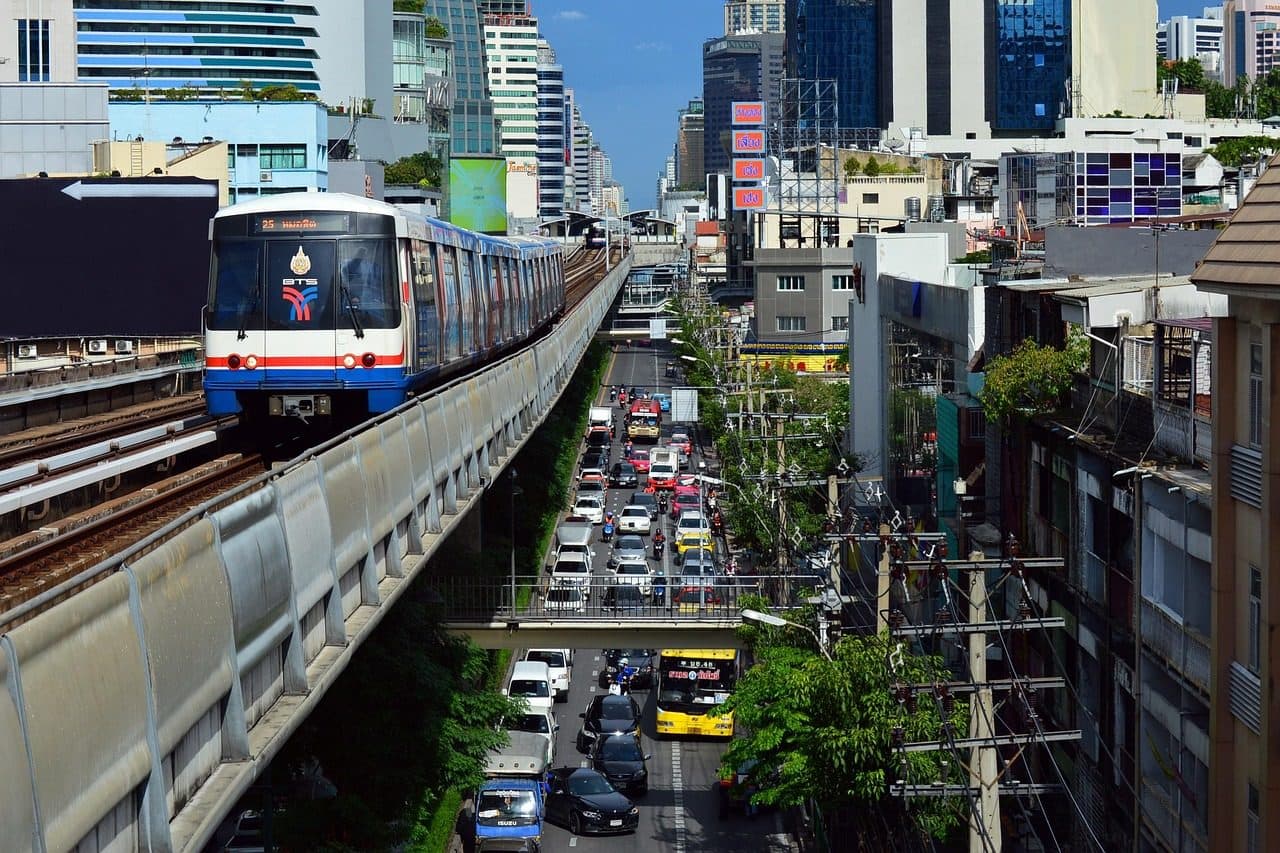
Bangkok's trains are fast, cool and clean, and they are the single best way to avoid the traffic. This is everything a visitor needs to use them confidently.
Updated
3 min read
How we research
In this guide ↓
Bangkok's rail network is the single most useful thing to understand before you arrive. The trains are fast, air-conditioned and frequent, and they let you skip the city's notorious road traffic. Visitors mostly need three lines.
The lines visitors use
| Line | What it's useful for | Key stations |
|---|---|---|
| BTS Sukhumvit Line | Ari, Chatuchak, Siam, Sukhumvit | Mo Chit, Ari, Victory Monument, Siam, Chit Lom, Asok, Phrom Phong, Thong Lo, Ekkamai |
| BTS Silom Line | Siam, Silom, the river | National Stadium, Siam, Sala Daeng, Chong Nonsi, Saphan Taksin |
| MRT Blue Line | Old Town, Chinatown, Silom, Sukhumvit, Chatuchak | Sanam Chai, Sam Yot, Wat Mangkon, Hua Lamphong, Silom, Sukhumvit, Chatuchak Park |
| Airport Rail Link | Suvarnabhumi Airport | Phaya Thai, Ratchaprarop, Makkasan |
| BTS Gold Line | ICONSIAM | Krung Thon Buri, Charoen Nakhon |
Other lines — the MRT Purple, Yellow and Pink lines and the SRT Red Line — mostly serve the suburbs. The Red Line matters if you're arriving at Don Mueang airport; see Bangkok airport to the city.
Interchanges worth knowing
- Siam — the two BTS lines meet.
- Asok (BTS) / Sukhumvit (MRT) — the main BTS–MRT link for Sukhumvit.
- Sala Daeng (BTS) / Silom (MRT) — for Silom and Lumphini Park.
- Mo Chit (BTS) / Chatuchak Park (MRT) — for the weekend market.
- Phaya Thai — BTS to the Airport Rail Link.
- Saphan Taksin (BTS) — next to Sathorn pier for the river boats.
Interchanges between BTS and MRT mean leaving one system and entering the other, often with a walk between stations.
How to pay
The BTS, MRT and Airport Rail Link are separate systems with separate fares. You pay each time you enter a different system.
MRT
- Contactless bank cards (Visa and Mastercard) work at the gates — tap in and out with the same card.
- Or buy a single-journey token from a machine or counter.
BTS
- Single-journey tickets from the station machines. Some machines take coins only; counters give change.
- A Rabbit card — the BTS stored-value card — saves queuing if you'll ride a lot. Tourists need to show a passport to register or top up a new card.
- Contactless bank card payment has been introduced on parts of the BTS network, but a ticket or Rabbit card remains the most reliable option for visitors.
Rush hour
Trains are packed roughly from 7:30–9:30am and 5–7:30pm on weekdays. If you can, travel outside those times — or at least avoid the busiest interchanges (Siam, Asok, Sala Daeng) at their peak. Trains still beat taxis at rush hour.
Etiquette
- Queue at the markings on the platform and let people off first.
- Give up priority seats for monks, older people, pregnant passengers and people with children.
- No eating or drinking on board.
- Stand on the left on escalators in many stations; follow what others do.
Accessibility
Most stations have lifts, but not at every exit, and some older BTS stations have long staircases. If you're travelling with a pushchair or limited mobility, check the station map for lift locations — they're marked on the signs at each entrance.
The trains don't go everywhere
The Old Town, the Riverside and Thonburi are better served by the river boats than by rail. Combining the BTS at Saphan Taksin with the Chao Phraya Express Boat is one of the most useful routes in the city. See our Chao Phraya River guide.
Questions people ask
Can I use a credit card on the Bangkok MRT?
Yes. The MRT accepts contactless Visa and Mastercard cards at the gates. On the BTS, single-journey tickets from machines or a Rabbit card are the most reliable options.
Do the BTS and MRT use the same ticket?
No. They are separate systems with separate tickets and fares, so you pay again when you change between them.
where to next?
- Bangkok Airport to the CityYour first hour in Bangkok sets the tone. Here is every way into the city from both airports, and a simple way to choose between them.
- The Chao Phraya RiverThe river is the fastest way between the Old Town, Chinatown and the riverside hotels, and the most pleasant one. Once you understand the boats, it changes how you plan the city.
- Where to Stay in BangkokLocation matters more in Bangkok than in most cities, because traffic punishes the wrong choice. Start with how you want to spend your evenings and how close you need to be to the BTS or MRT.