Food
Bangkok Food Tours
A good food tour can teach you more about Thai food in three hours than a week of guessing. A bad one is an expensive walk. Here's how to tell them apart.
Updated
3 min read
How we research
In this guide ↓
Bangkok is one of the easiest cities in the world to eat well in on your own. So is a food tour worth it? For some travellers, very much — a good guide explains what you're eating, takes you to places you'd never find and orders dishes you wouldn't know to ask for. For others, it's an expensive way to do something you could do alone. This guide helps you decide, and choose well.
Who a food tour is for
Worth it if you:
- Have only a few days and want to try a lot quickly.
- Feel nervous ordering without English menus.
- Have dietary requirements and want them handled.
- Want the stories — the history of a dish, a family business, a neighbourhood.
Probably not worth it if you:
- Are happy to point, smile and experiment.
- Are visiting Yaowarat in Chinatown, which is easy to explore alone after dark.
- Are on a tight budget — the cost of a tour would buy several days of street food.
The main kinds of tour
Chinatown evening tours
The most popular kind. You walk Yaowarat Road and its side streets after dark, eating at several stalls and shophouses. Great atmosphere; also the easiest area to explore without a guide. See our Chinatown guide.
Old Town and Bang Rak tours
Often in the afternoon or early evening, visiting long-running shophouse restaurants and small family kitchens around the Old Town or along Charoen Krung. Less obvious places, harder to find alone — this is where a guide adds the most.
Market tours
Morning tours of fresh markets, explaining ingredients, fruit and prepared foods. Some combine a market visit with a cooking class. See Thai cooking classes in Bangkok.
Tuk-tuk or night tours
Covering several neighbourhoods by tuk-tuk in one evening, often mixing food with sights like the flower market and temples lit up at night. More ground covered, less time at each stop.
What a good food tour looks like
- Small group — ideally ten people or fewer.
- A clear list of stops and dishes, so you know how much food is included.
- Places that serve locals, not restaurants set up for tour groups.
- Dietary requirements handled in advance, including allergies, vegetarian and halal.
- Drinks — check whether they're included.
- Realistic length: around three to four hours is typical.
Questions to ask before you book
- How many stops, and roughly how much food at each?
- Is it walking, or is there transport between stops?
- How many people are in a typical group?
- Can they handle my dietary requirements, and how?
- Where does it start and finish, and how will I get back to my hotel afterwards?
- What happens if it rains?
Tips for the day
- Arrive hungry, but not starving — most tours pace the food over three or four hours.
- Wear comfortable shoes for walking and standing.
- Bring cash for extra drinks or anything you want to buy along the way.
- Ask questions. A good guide loves explaining what's in a dish and where it comes from.
The do-it-yourself version
If you'd rather go alone, here's a simple self-guided evening:
- 6pm: take the MRT to Wat Mangkon and walk to Yaowarat Road.
- Walk the full length of Yaowarat first, noting the stalls with queues.
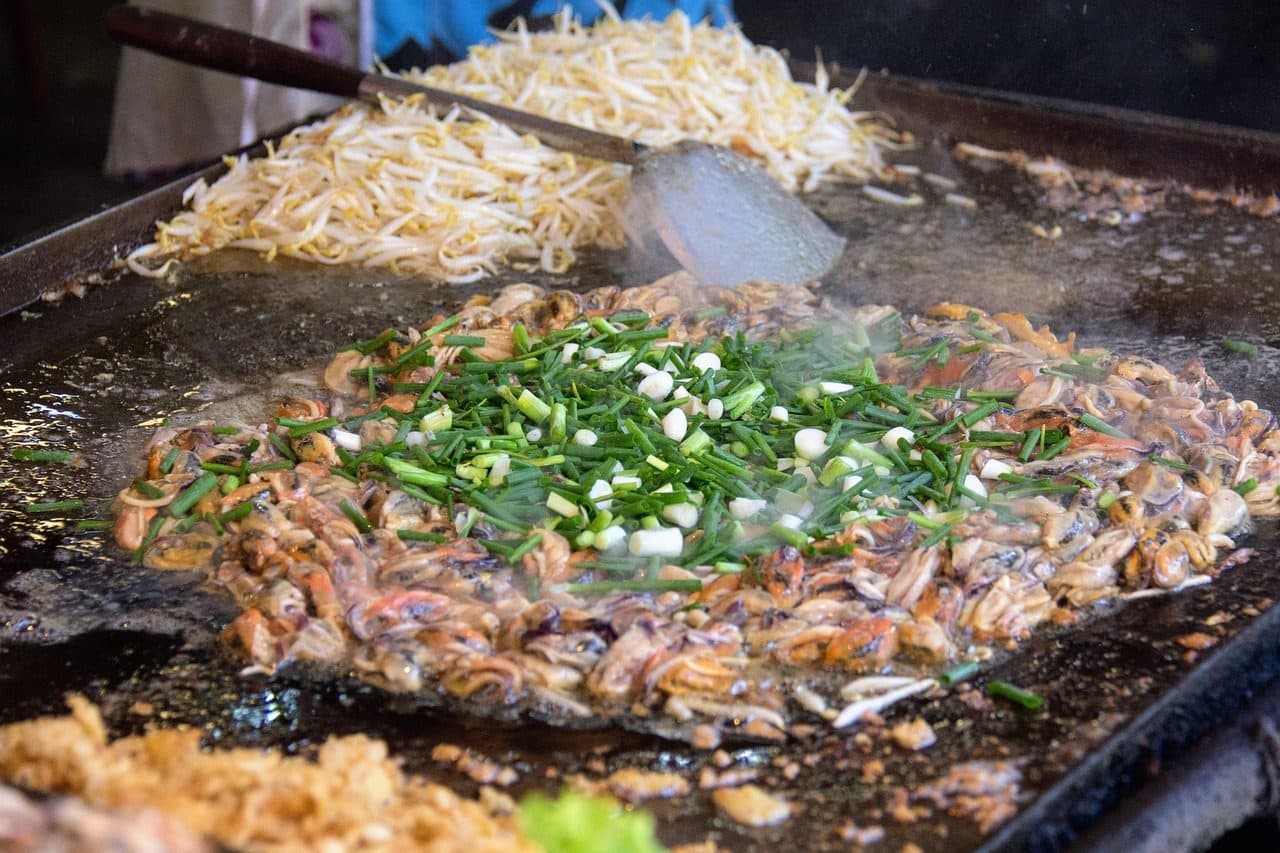
- Order small and share: a bowl of kuay jap (rolled noodles in peppery broth), grilled seafood, an oyster omelette.
- Finish with dessert: Chinese sweet soups or mango sticky rice.
Our street food guide covers where to go and how to choose stalls across the city.
where to next?
- Bangkok Street FoodBangkok's street food is concentrated in particular streets at particular times. Knowing where and when matters more than any list of stalls, which change constantly.
- Bangkok Chinatown (Yaowarat)Chinatown is two places: a hectic wholesale district by day and one of the world's great street-food streets by night. Plan for both.
- Thai Cooking Classes in BangkokA cooking class is one of the few Bangkok experiences you keep using when you get home. The good ones share a few specific features.